
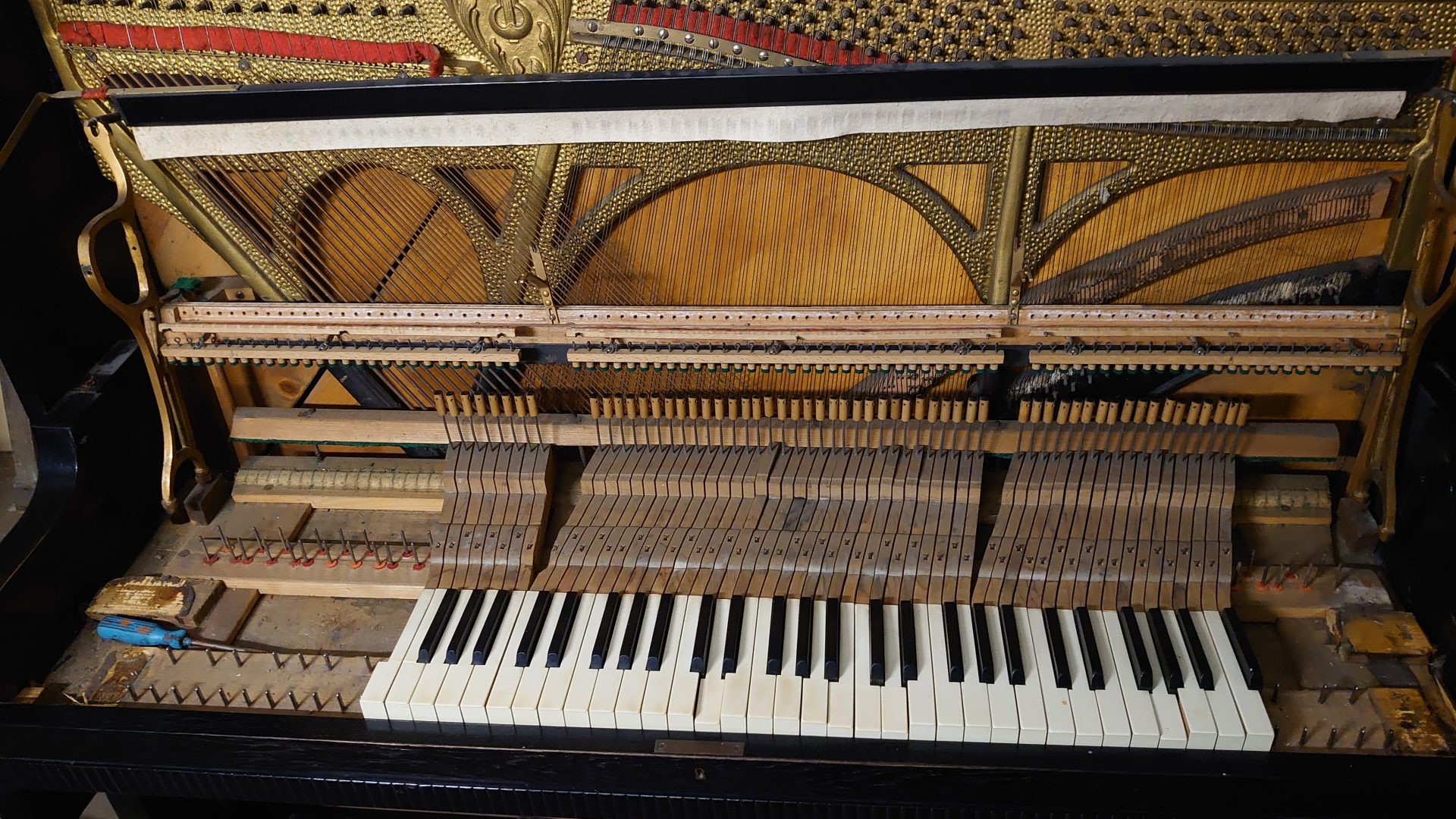
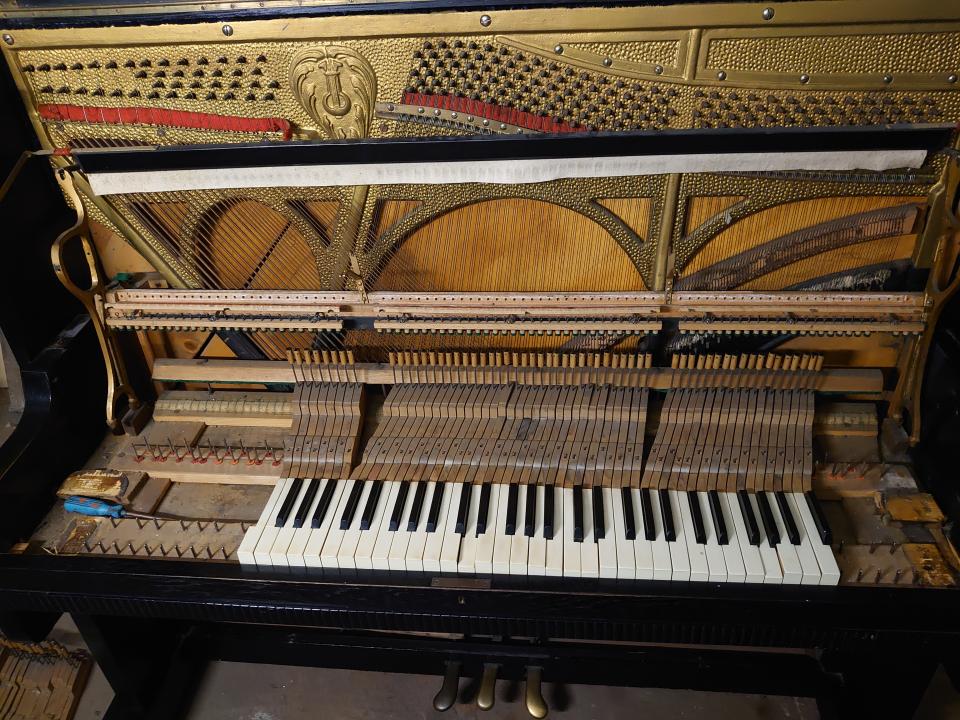
So, a piano?
After a year, I returned to the idea of building a better celesta.
What would a Hulam sound like with five octaves? How could I design a mechanism that would be comfortable to play? And the most important question: where could I find a sponsor willing to invest in such a project? Building a high-quality mechanism requires hundreds of hours of honest craftsmanship (not to mention quality materials)—something I unfortunately couldn’t afford. Yet the desire to hear an improved instrument was stronger.
I wrestled with these questions for several months, eventually coming to the conclusion that such a project wouldn’t be feasible in the near future.
Then, one day, just when I was about to give up, the right idea came to me: UPCYCLING! There are plenty of old, unplayable pianos—the majority are “free to take,” though the transport often costs more than the piano itself. Many of them have mechanisms in good condition; they just no longer hold their tuning.
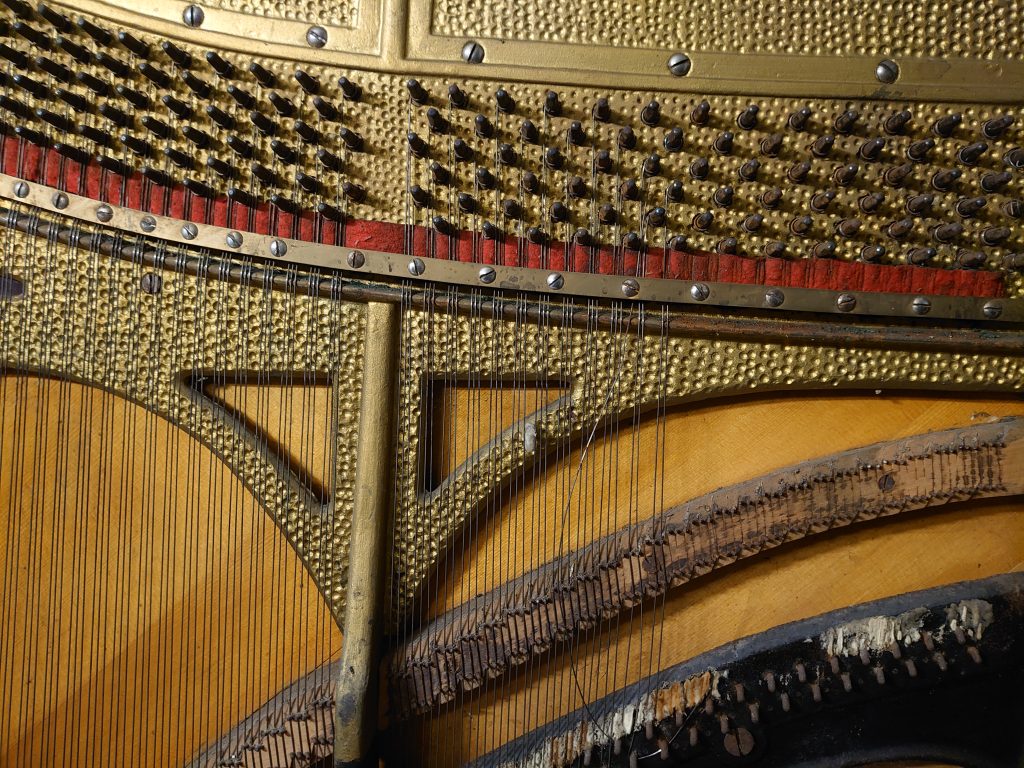
That was all I needed—I started searching. In the end, I found the right piece: not too far from home and, crucially, not on the fifth floor without an elevator. Thanks to my family’s help, the piano soon ended up in the garage, ready to be taken apart. According to available information, it was probably a century-old Regia piano. Apparently, a low cost piano. Well, a good start.
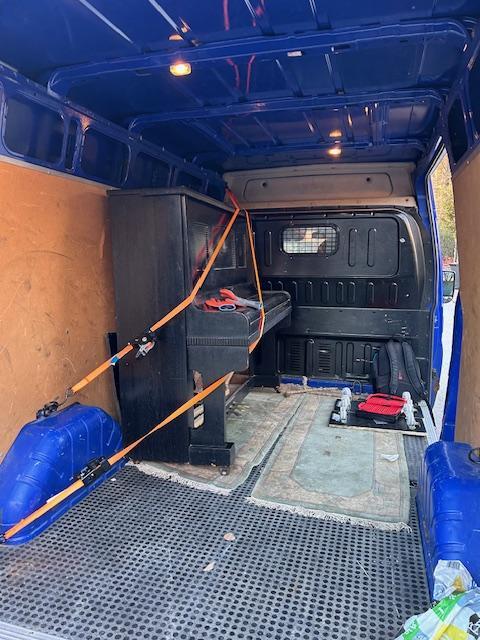
After a short time, I realized that taking a piano apart wasn’t exactly fun work — more like a necessary evil. The mechanism comes out easily, as do the keys. But the board under the keys has to be more pried out than unscrewed—the screws are hidden, and everything is also glued together. Similarly, each string pin must be removed one by one to separate the cast-iron frame, which is then recycled.
After a few days of work, I had the keyboard and mechanism ready—the foundation of the new instrument. And that’s when the fun part began.
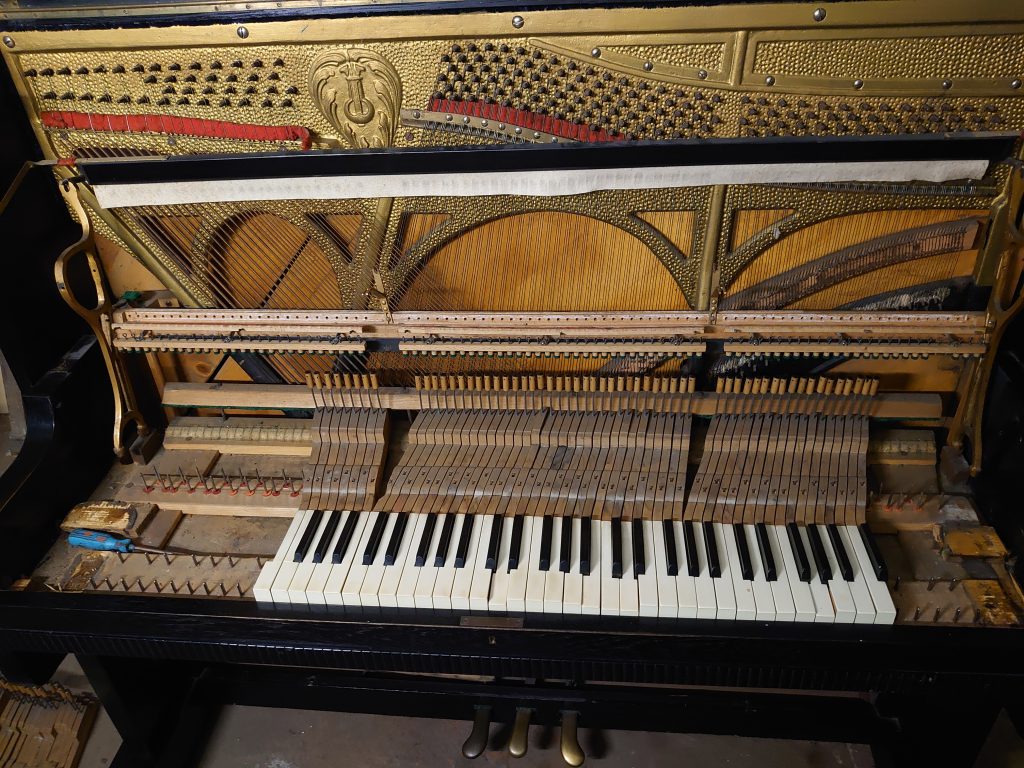
The next phase of work consisted of two parts:
– Refurbishing the old piano mechanism, which had been significantly damaged by clothes moths.
– Designing the sound component—the Hulam, which was to be attached to the mechanism. 🙂