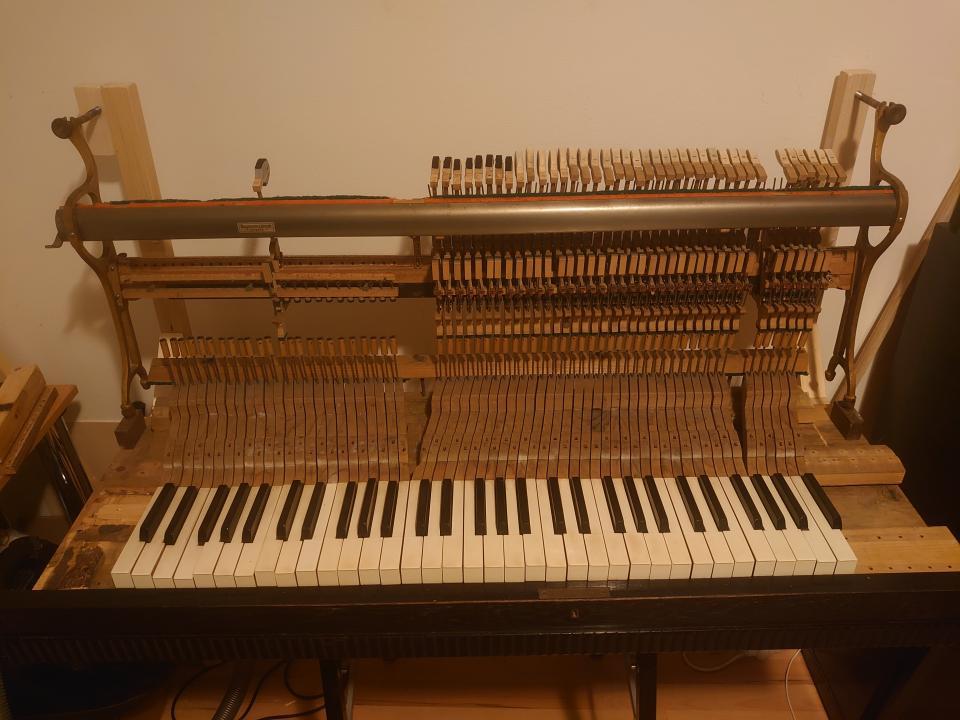
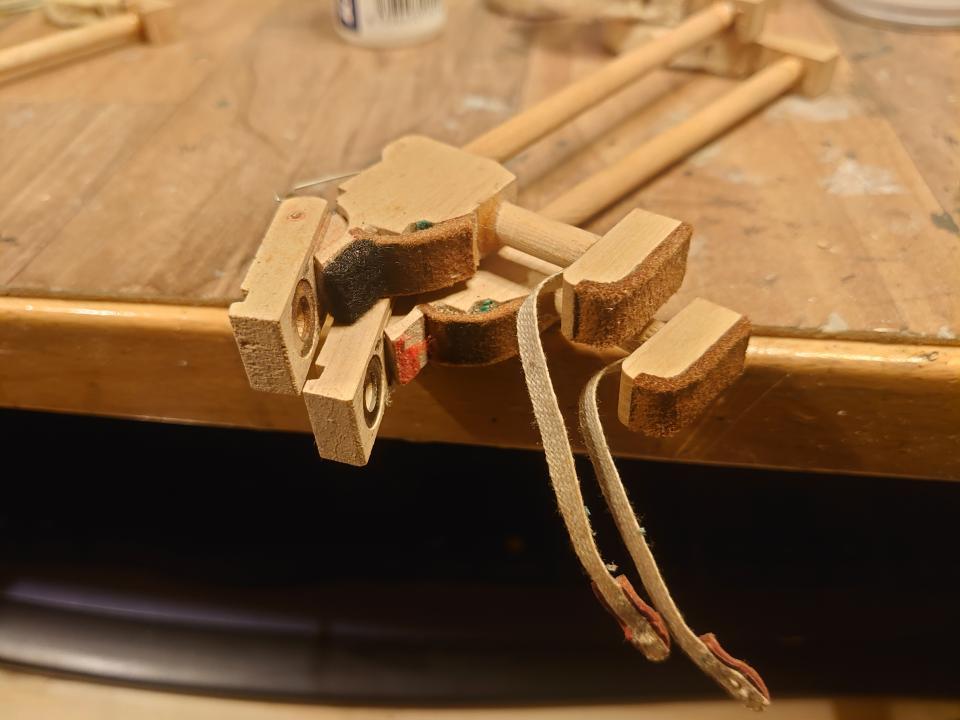
As I mentioned in my previous article, moths had thoroughly destroyed the piano mechanism. You wouldn’t believe how much felt there is in a piano. And yet, it’s a key material—not only does it form the heads of the hammers, but it also fills almost every gap where something moves or rotates, preventing rattling and thus negatively affecting the musical experience.
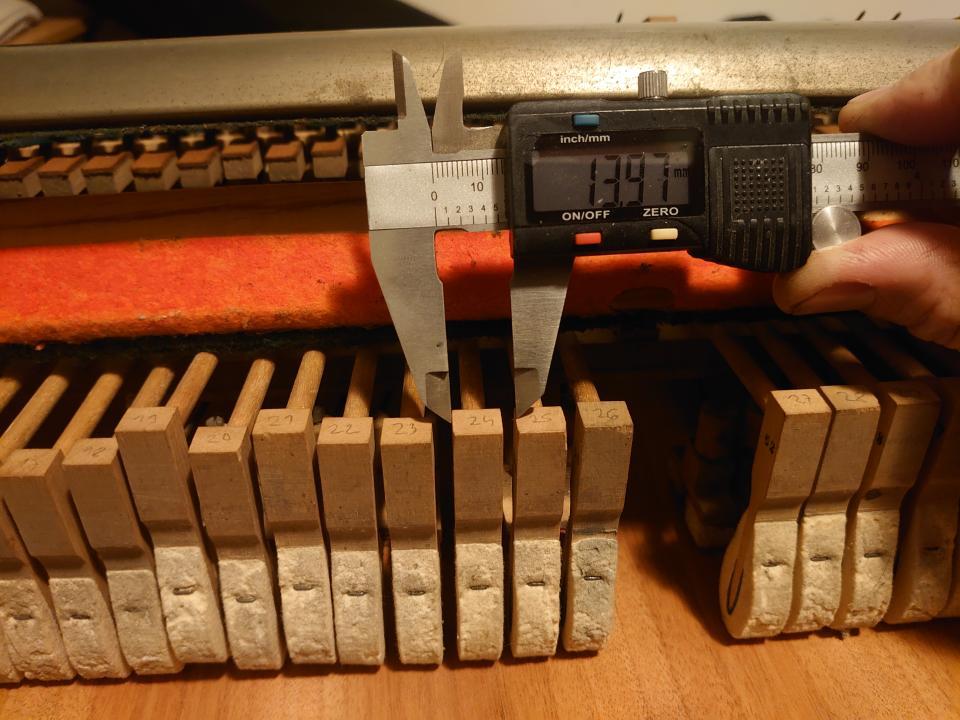
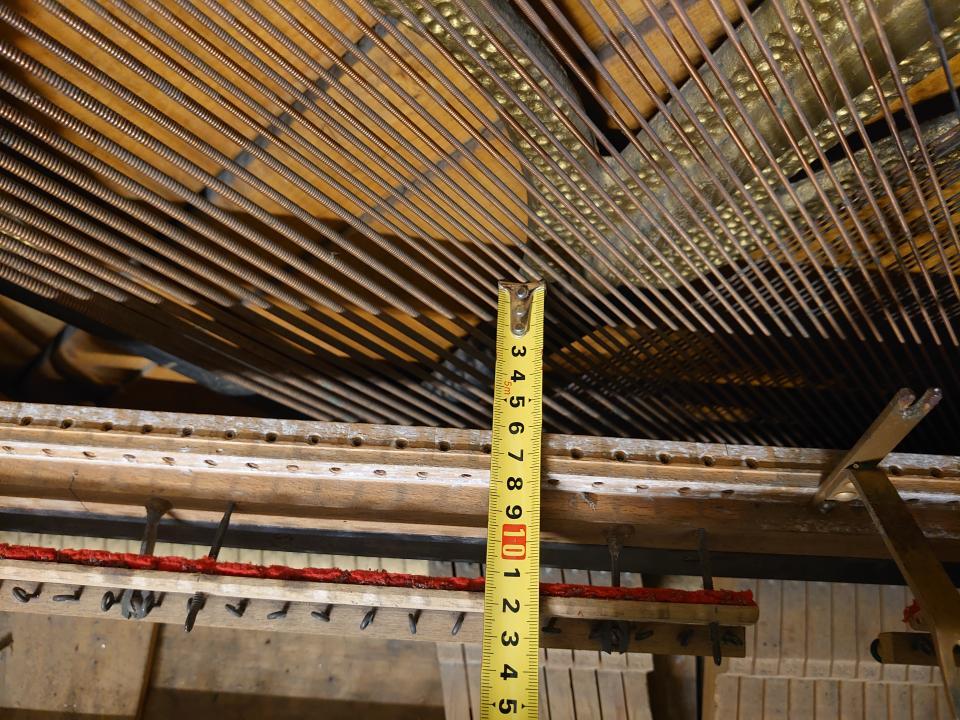
The first step was to measure everything, just as it had been originally assembled—mainly the distance from the mechanism to the strings and the spacing of the hammers.
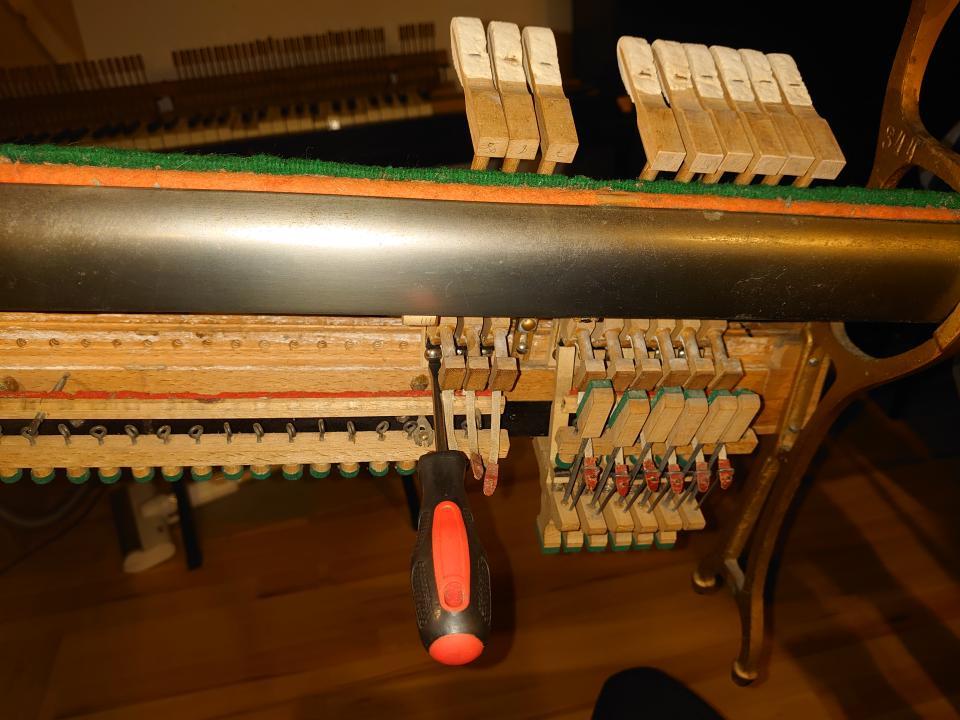
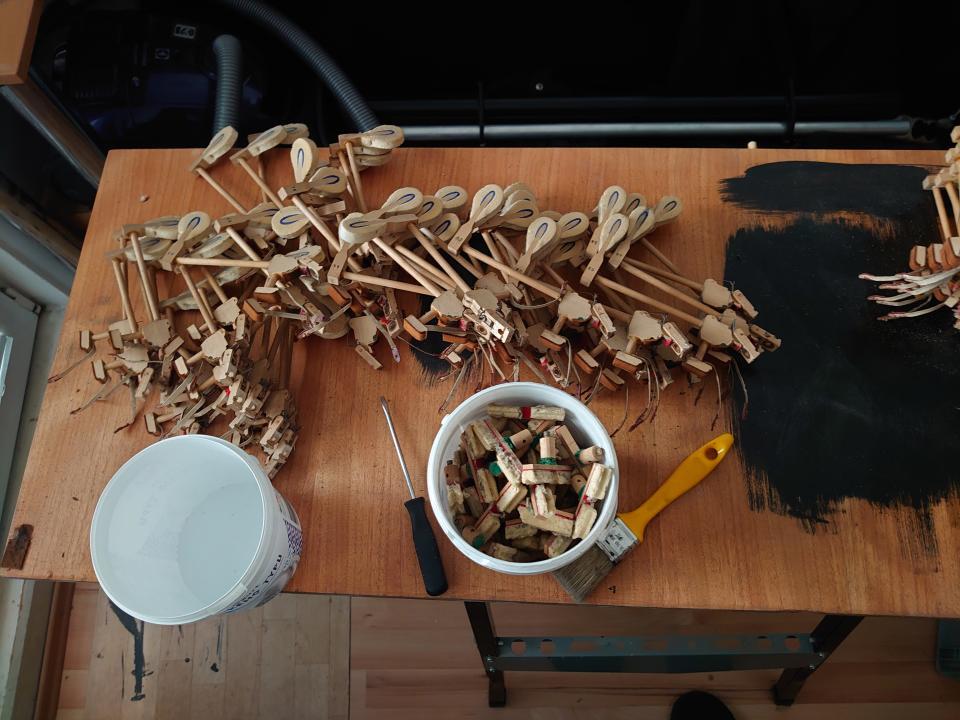
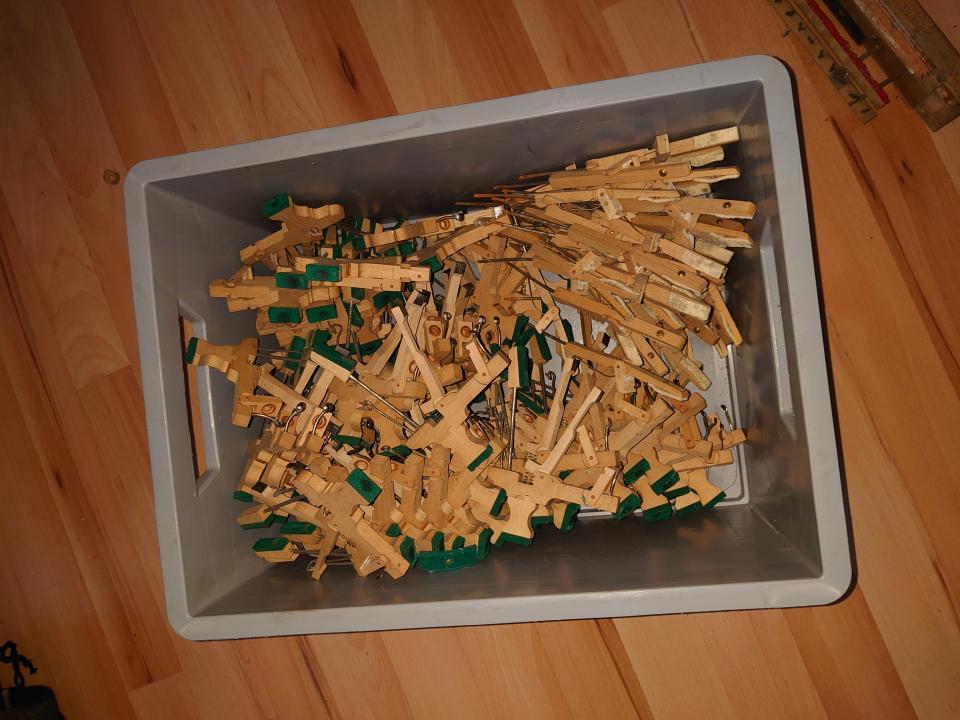
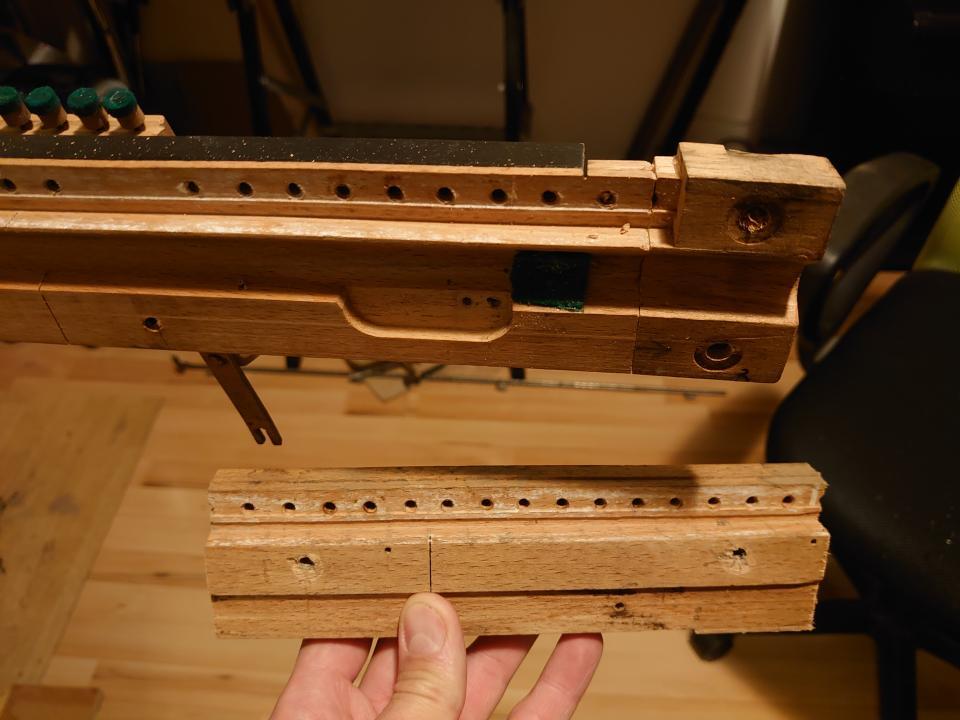
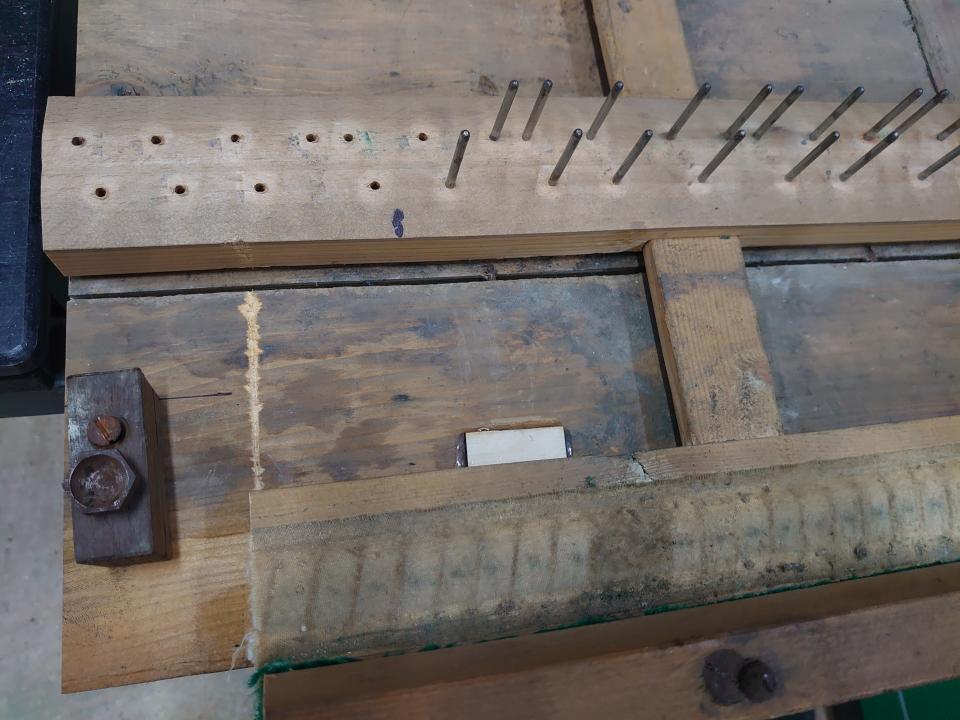
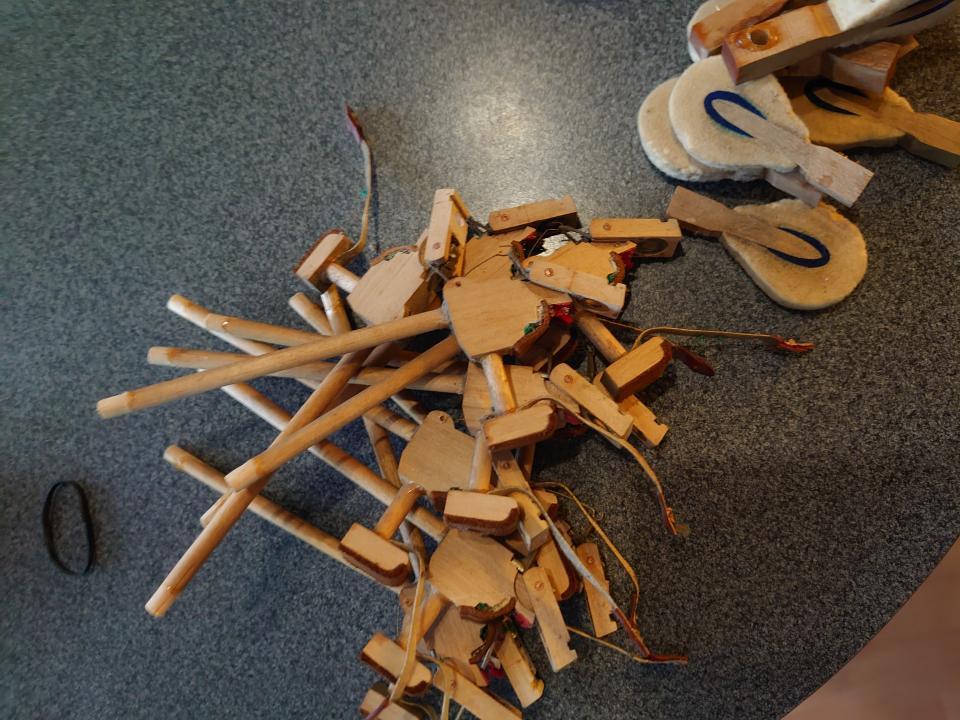
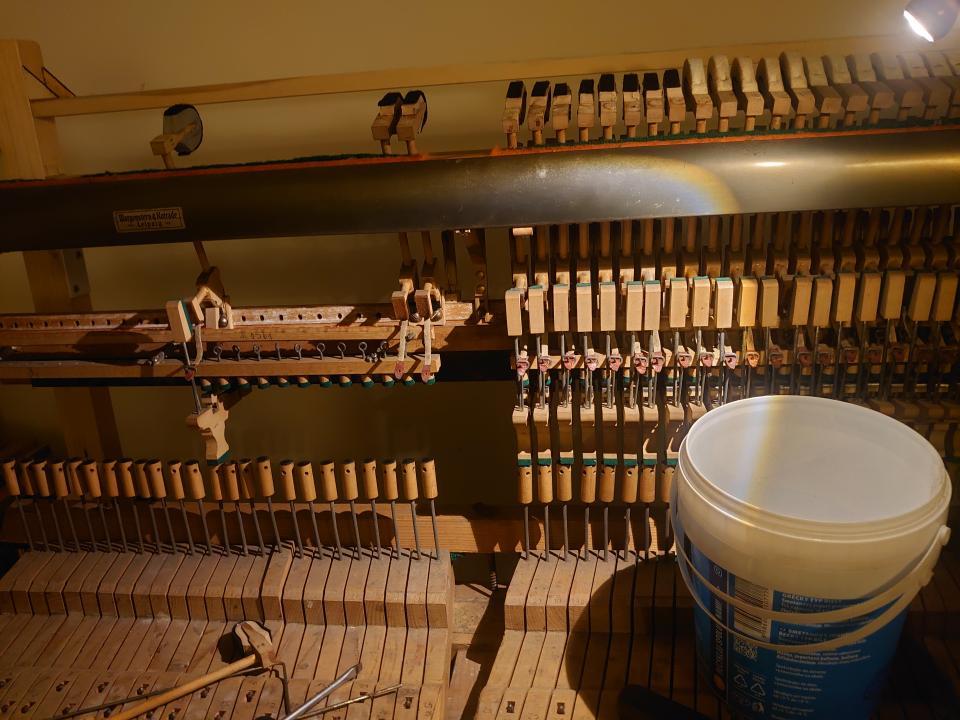
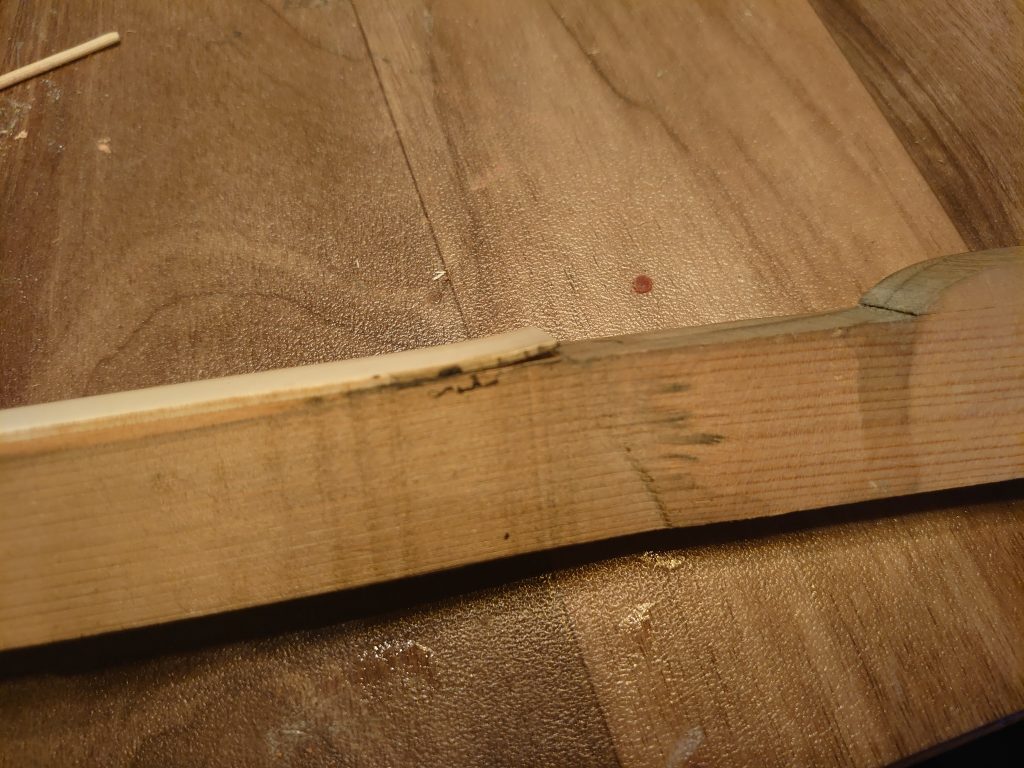
Measuring the spacing of the hammers. At the bottom right, you can see how the felt has been nibbled by moths.Measuring the distance of the action from the strings. An important detail to know where to place the Hulam tones.Then the disassembly could begin – unscrew each individual component, ideally marking where it belonged, and then set it aside. I wasn’t thorough enough with labeling, which later caused me trouble, but I managed to resolve the situation.A pile of hammers and dampers. Everything had to be cleaned of dust and moth remnants.Damper levers and hammer jack mechanisms.The action needed to be shortened to 5 octaves.The same goes for the baseboard.Next, it was necessary to design a frame to hold the action, since I had removed the harp with the strings that held it in the piano. The wall helped me, as I could measure the distance from the wall to the hammers. In the photo, the baseboard hadn’t been shortened yet.The completed celesta base. Already with the hammers installed.
The hammers needed to be sorted by hardness and weight. The originals could only be used for some of the notes; the rest didn’t sound good. For those, I had to make my own. Another issue was the angled hammers. The piano doesn’t have all the strings stretched vertically. The lowest ones are crossed so the instrument isn’t unnecessarily large.
I was planning to install the Hulam tones vertically, since their length is significantly shorter.
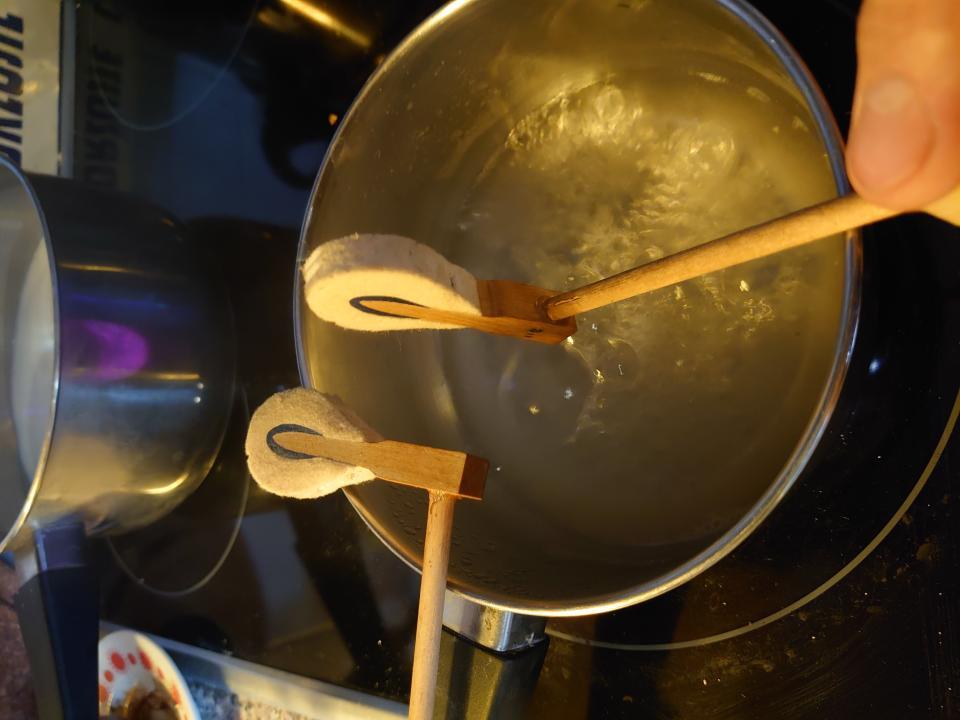
Because of this, the hammers had to be carefully disassembled and modified so they could stand vertically.
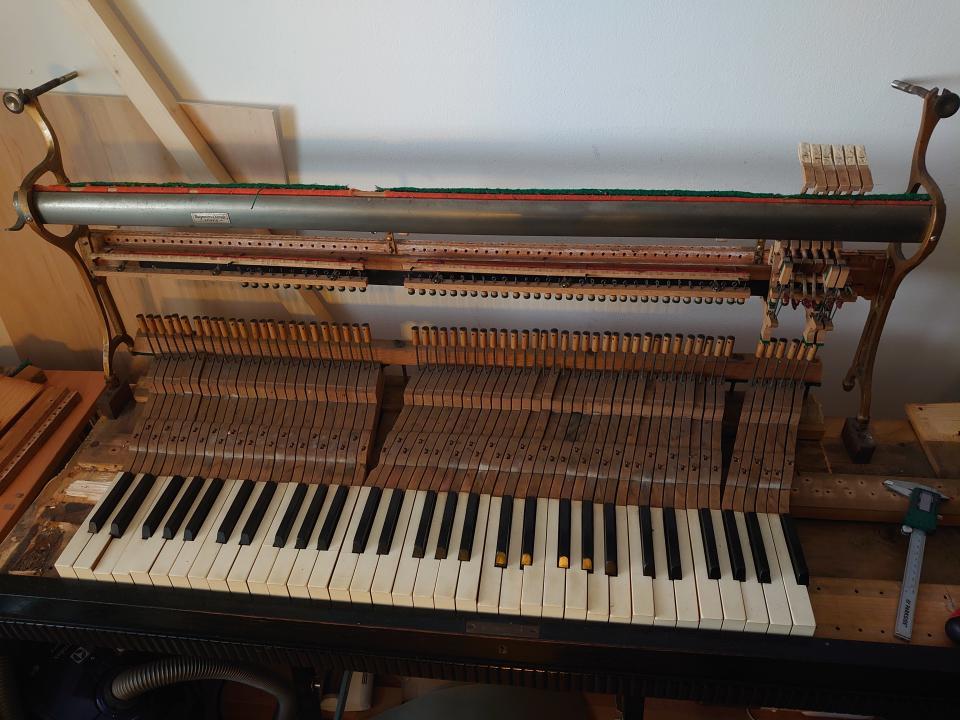
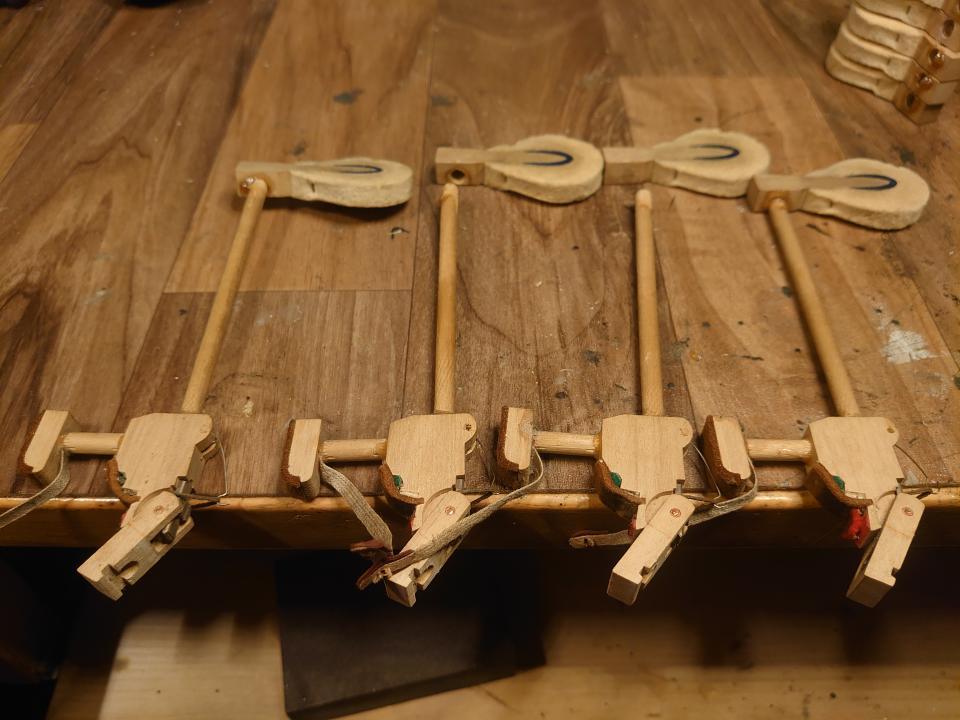
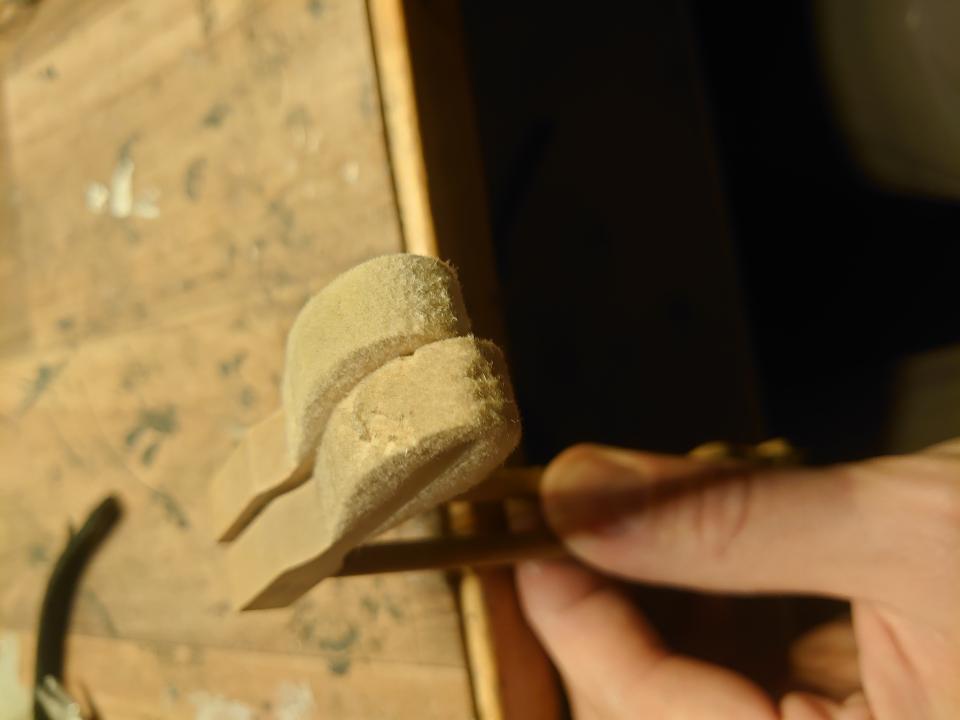
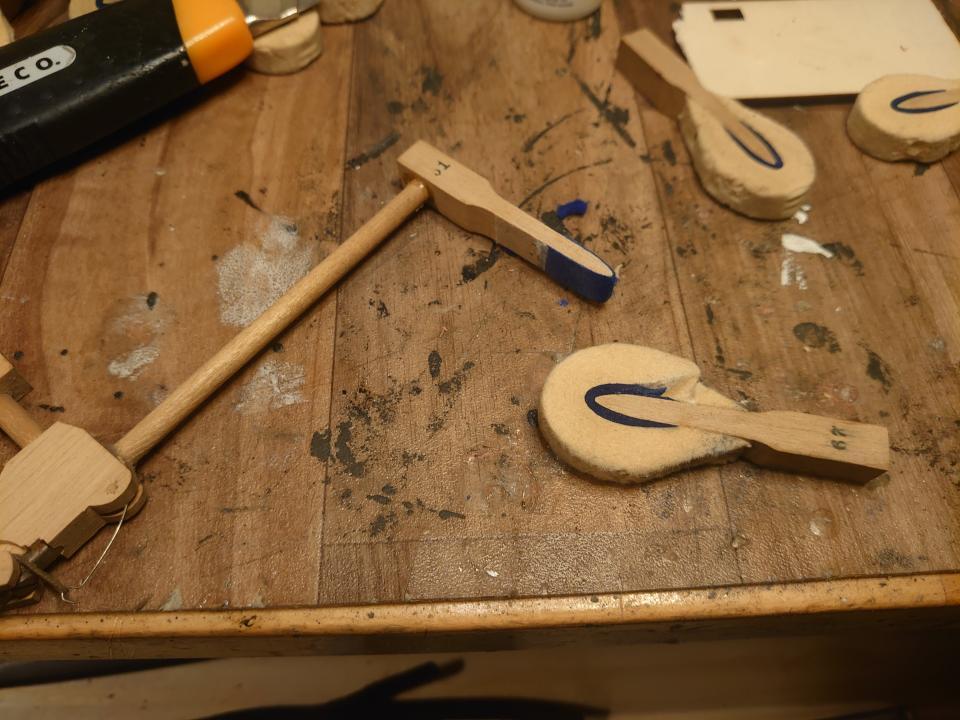
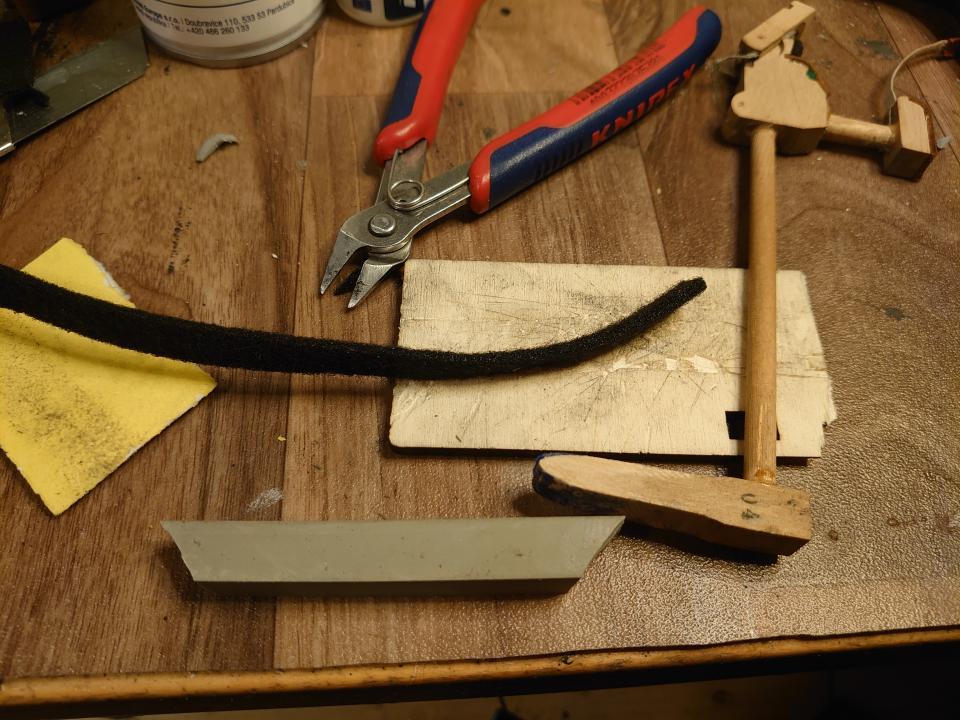
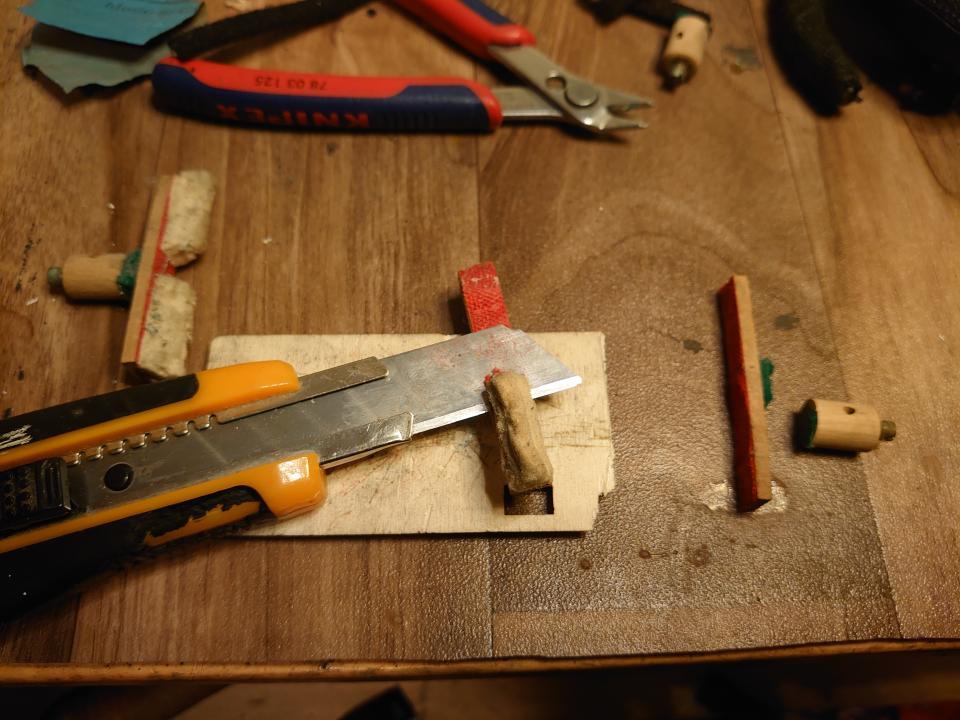
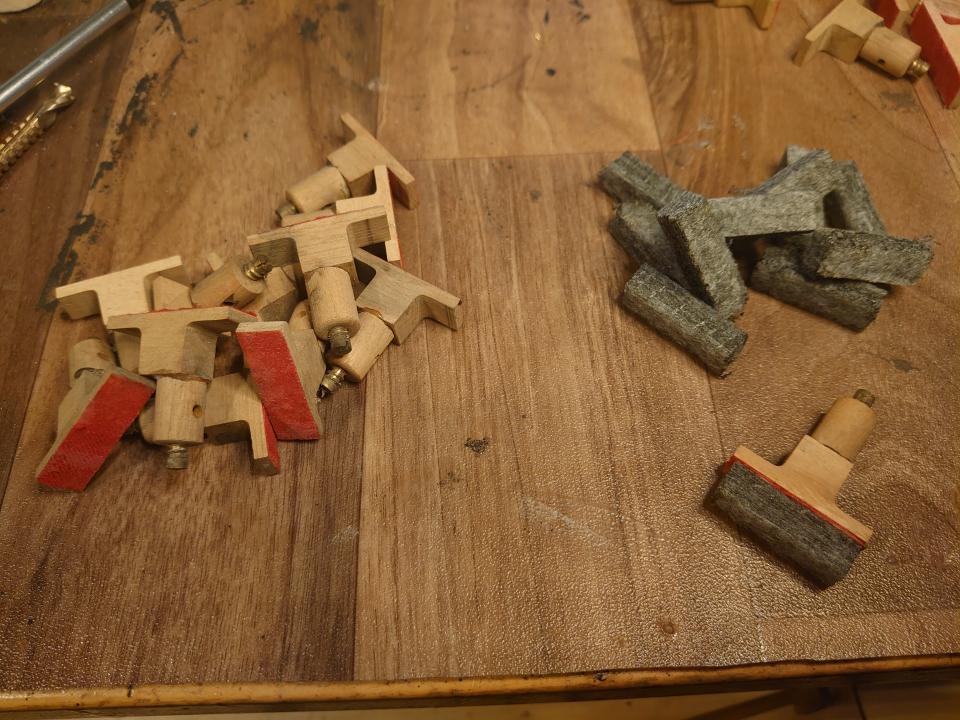
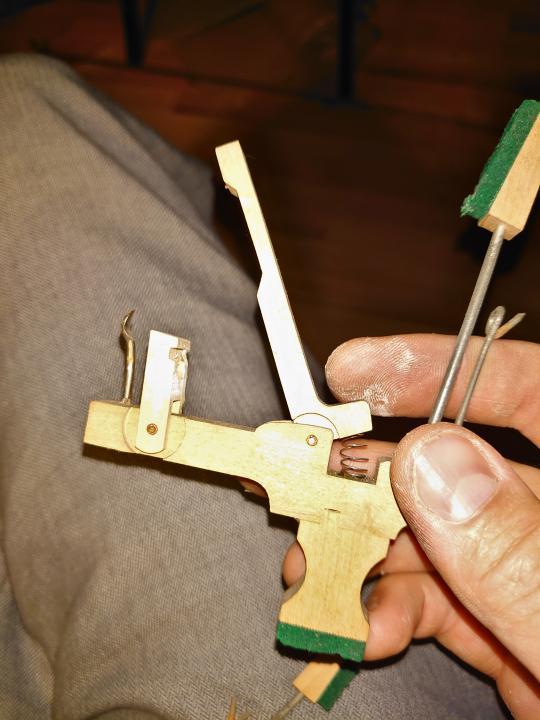
Why do I steam the hammers? They are glued with hide glue, which can be undone with hot steam.Disassembled hammers.3 steps: separate, fill the hole with a peg, drill, and glue again.Next step: The small black felt on the top of the hammer serves as the contact surface for the jack mechanism. These felt squares were almost completely eaten away. The piano would click when a key was released.The hammers were significantly worn. I sanded the striking edge and slightly softened it.The original hammers weren’t suitable for the lower notes. They produced too many high overtones, which I didn’t want to hear. I had to choose a different material, cutting off the original felt and gluing on suitable rubber.Preparing the hammer for the lowest notes.Next in line were the damaged dampers. Just as important a component as the hammer. The hammer sets the note vibrating, and the damper puts it to rest.Gluing new felt onto the dampers. This turned out to be insufficient, so all the dampers had to be redone.Jack mechanism. This piece is mounted between the key and the hammer. All of them had to be checked, loosened, and lubricated if necessary. Some were completely stiff, while others squeaked.Assembling the individually repaired action components.
This is how the top four octaves of the celesta are assembled. The lowest bass octave is being rebuilt and will be covered in a separate article.
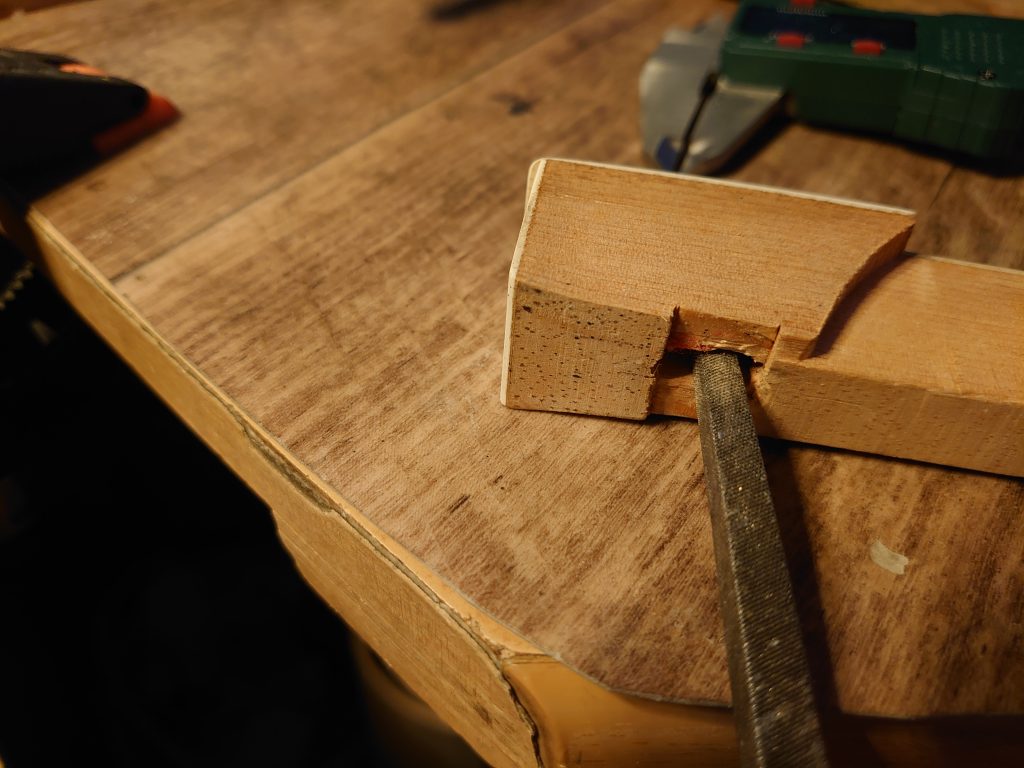
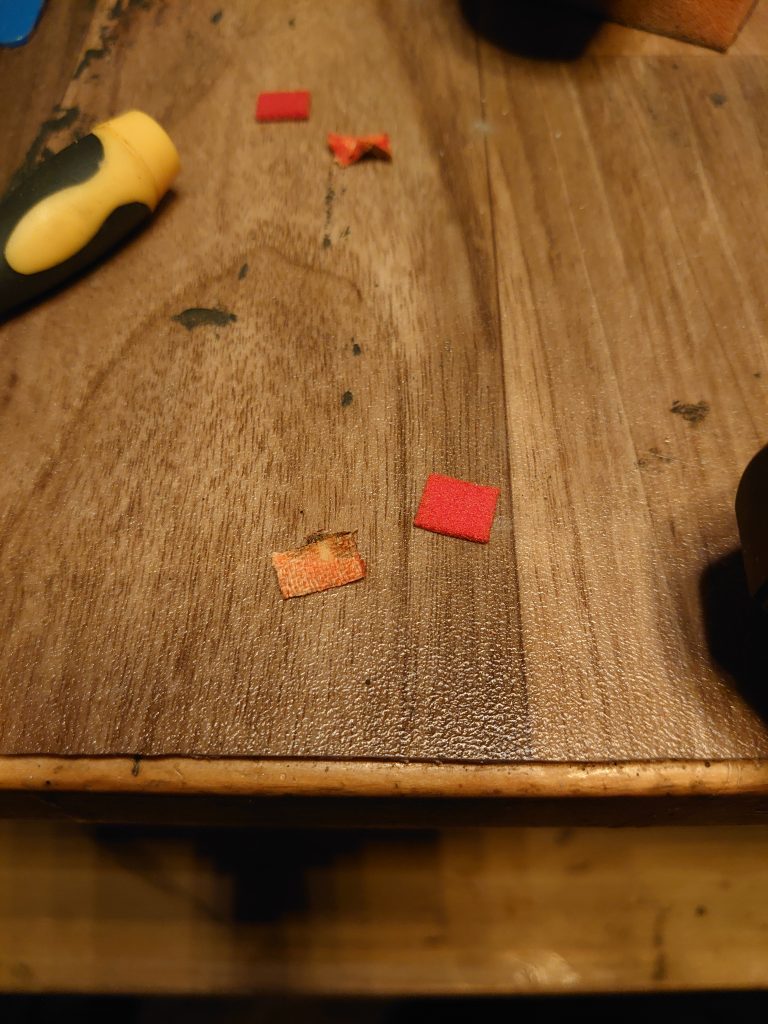
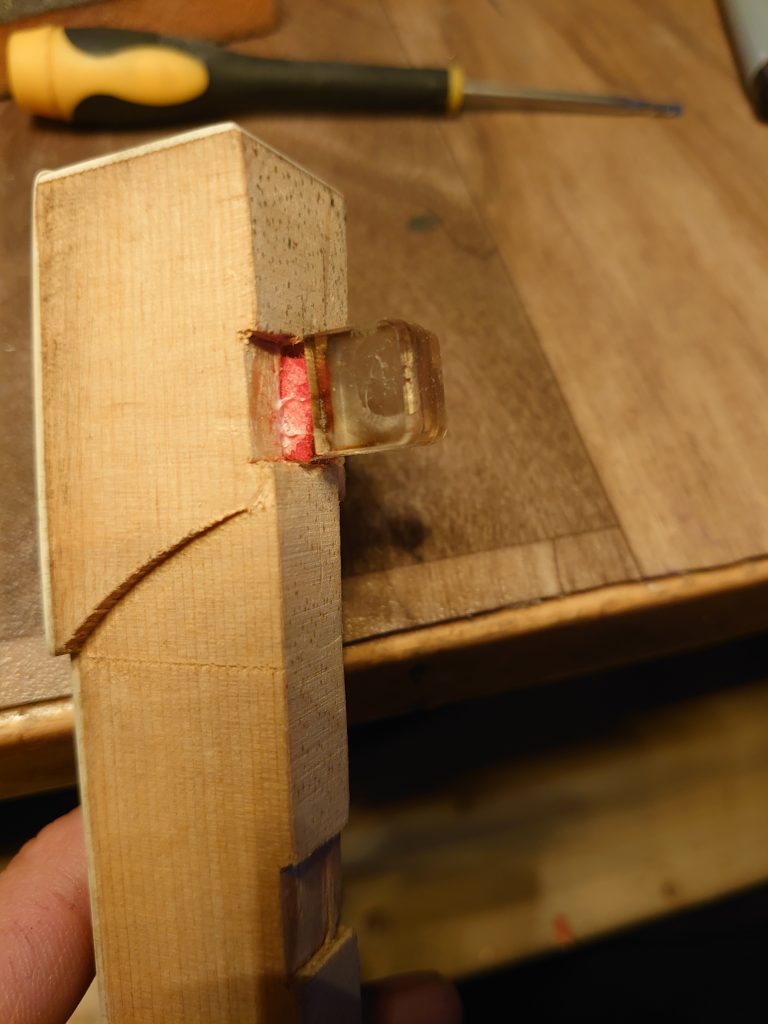
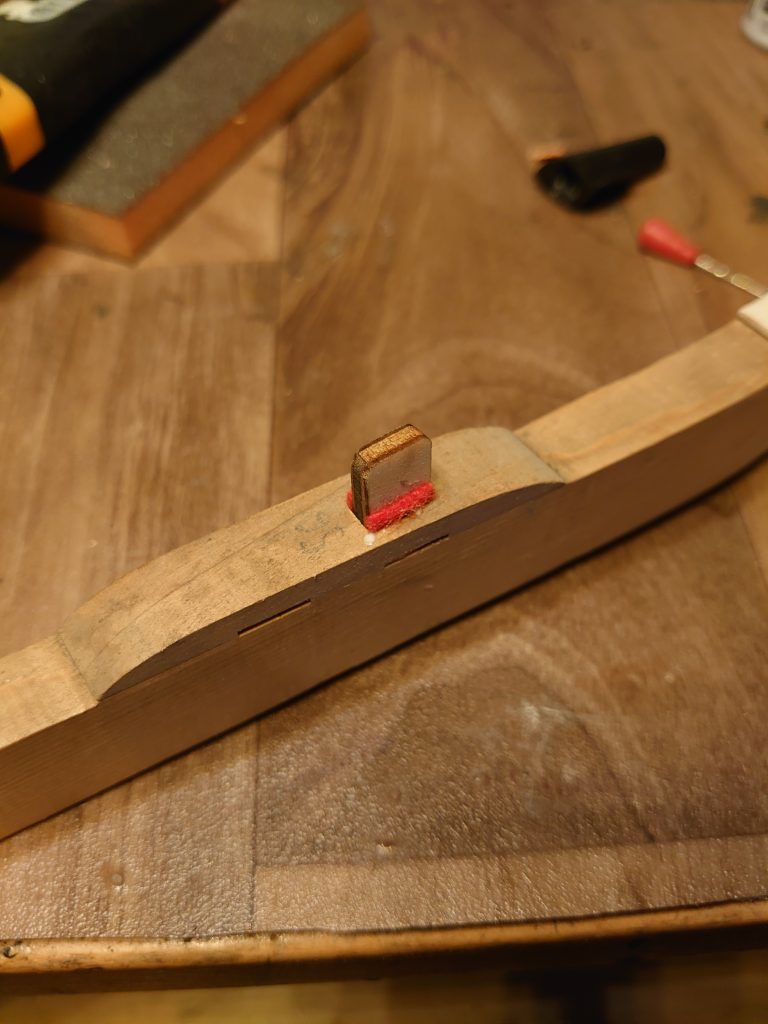
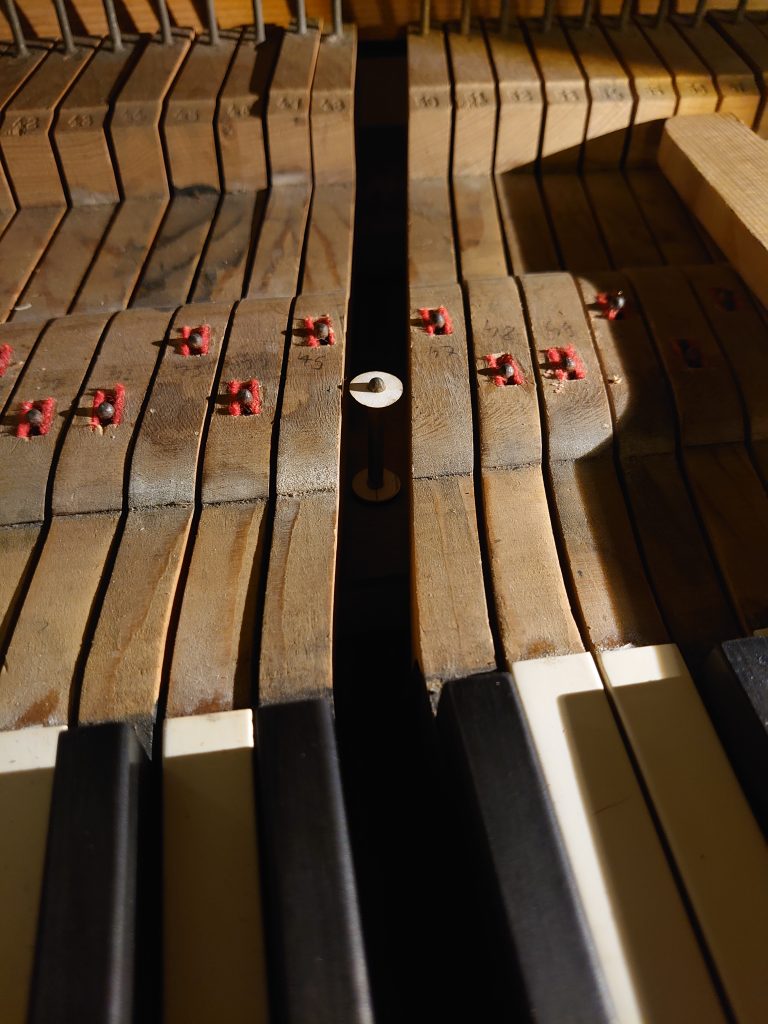
The final, no less important part of the action is the keys. Yes, they also contain felt, which had been eaten by moths.
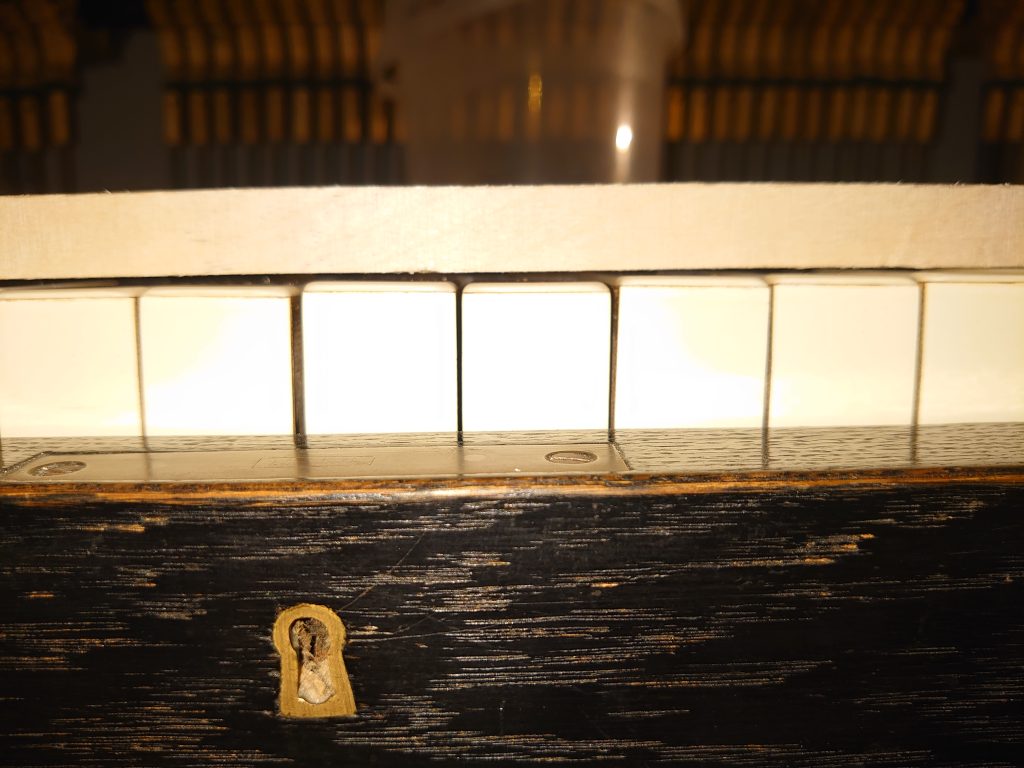
It was necessary to clean the keys of the old felt.Old vs new feltGluing new felt into the key. The plexiglass jig ensured the gap was the correct size.Each key had two such spots.On many keys, the celluloid tops were peeling off. I glued the detached pieces back on and then lightly sanded the keys.After assembly, each key is at a different height.
I leveled them by adding paper shims underneath.
With this step, the action was roughly ready, and I could move on to the sound section. Looking back, I think I could have gotten a better piano, but the good thing is that I learned a lot from repairing the action.
We use cookies on our website to give you the most relevant experience by remembering your preferences and repeat visits. By clicking “Accept All”, you consent to the use of ALL the cookies. However, you may visit "Cookie Settings" to provide a controlled consent.
This website uses cookies to improve your experience while you navigate through the website. Out of these, the cookies that are categorized as necessary are stored on your browser as they are essential for the working of basic functionalities of the website. We also use third-party cookies that help us analyze and understand how you use this website. These cookies will be stored in your browser only with your consent. You also have the option to opt-out of these cookies. But opting out of some of these cookies may affect your browsing experience.
Necessary cookies are absolutely essential for the website to function properly. This category only includes cookies that ensures basic functionalities and security features of the website. These cookies do not store any personal information.
Any cookies that may not be particularly necessary for the website to function and is used specifically to collect user personal data via analytics, ads, other embedded contents are termed as non-necessary cookies. It is mandatory to procure user consent prior to running these cookies on your website.